
Rotator Cuff Treatment in Barrie
Shoulder pain when you lift your arm, reach behind your back, or lie on your side at night? Rotator cuff problems are one of the most common causes of shoulder pain. Our Physiotherapists can assess your shoulder and build a plan to help you lift, reach, and sleep more comfortably.
- One-on-one assessment with a Registered Physiotherapist
- Exercise-based rehab, manual therapy, IMS / dry needling, and Shockwave Therapy
- Direct billing to most insurance providers
- Downtown Barrie at 105 Collier Street
Prefer to talk first? Call or text (705) 279-2759
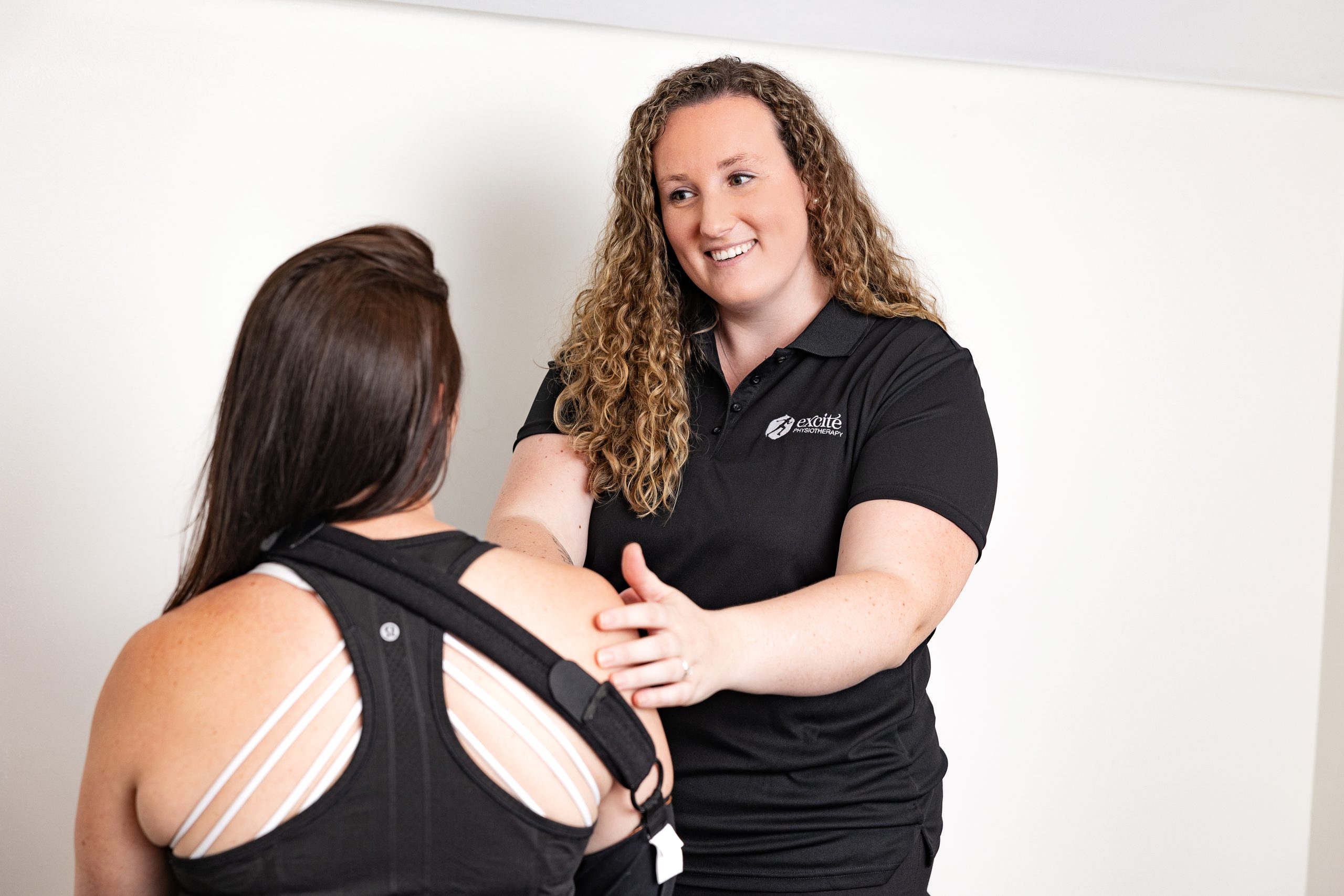
Does This Sound Familiar?
- Pain on the outside of your upper arm when you lift your arm out to the side or overhead
- Pain reaching behind your back, like tucking in a shirt or doing up a bra
- Pain at night, especially when you lie on that side
- Weakness or fatigue when you lift, carry, or hold your arm up
- A painful catch partway through lifting your arm
- Sudden weakness after a fall or a heavy lift
Common Causes We Assess
- Doing more than your tendons are used to, like painting a ceiling or starting a new gym program
- Repeated overhead work or sport, such as swimming, throwing, racquet sports, or CrossFit
- Age-related tendon changes, which become common after 40
- A fall onto an outstretched arm, or a sudden heavy lift
- Weakness or poor control of the shoulder blade muscles
- Health factors that affect tendons, such as smoking and diabetes
Rotator cuff pain often builds up gradually, and the right plan depends on what is overloading your tendon. That is why every visit starts with a thorough assessment.
What Is the Rotator Cuff?
The rotator cuff is a group of four muscles (supraspinatus, infraspinatus, teres minor, and subscapularis) that start on your shoulder blade and attach to the top of your arm bone with tendons. Together they keep the ball of your shoulder centred in its socket while you lift, reach, and rotate your arm.
Your shoulder has more range of motion than any other joint in your body. The trade-off is that it relies heavily on these muscles for stability, so the rotator cuff works every time you use your arm. That makes it one of the most common sources of shoulder pain.
Types of Rotator Cuff Problems
- Rotator cuff tendinopathy: the tendon becomes irritated and less able to handle load, often after a change in activity. This is the most common rotator cuff problem.
- Partial-thickness tear: part of the tendon’s thickness is torn. Many partial tears respond well to a strengthening program.
- Full-thickness tear: the tear goes all the way through the tendon. These can happen gradually with age or suddenly with an injury.
- Calcific tendinitis: calcium deposits form in the tendon and can cause intense pain.
- Subacromial pain (impingement): pain under the point of the shoulder, usually linked to an irritated rotator cuff tendon or bursa.
Rotator cuff tears are often found on scans in people who have no shoulder pain at all, and they become more common with age. Pain and weakness do not always match what a scan shows, which is why your assessment focuses on how your shoulder moves and how strong it is.
How We Assess Your Rotator Cuff
Your Physiotherapist will ask how your pain started, what makes it better or worse, and what you need your shoulder to do. Then we will:
- Watch how your shoulder and shoulder blade move as you lift your arm
- Test the strength of each rotator cuff muscle
- Use specific tests to narrow down which structures are involved
- Check your neck and upper back, which can refer pain into the shoulder
Most rotator cuff problems do not need an ultrasound or MRI before starting treatment. If you have sudden, significant weakness after an injury, we will refer you to your doctor promptly, because some traumatic tears benefit from an early surgical opinion.
Rotator Cuff Treatment at Excite Physiotherapy
Your Physiotherapist will build a plan around your goals, whether that is sleeping through the night, lifting at work, or getting back to your sport. Depending on your assessment, treatment may include:
- A progressive strengthening program for the rotator cuff and shoulder blade muscles, the core of rotator cuff rehab
- Advanced Manual Therapy for the shoulder, neck, and upper back
- IMS / dry needling for tight, irritated muscles around the shoulder
- Shockwave Therapy for calcific tendinitis and some persistent tendon pain
- Sleep and activity advice, including positions that ease night pain and ways to adjust overhead work
- A return-to-work or return-to-sport plan so you build back up safely
Do I Need Surgery for a Rotator Cuff Tear?
Not always. Many rotator cuff tears, especially those that develop gradually with age, are managed well with an exercise-based Physiotherapy program. Research comparing surgery with Physiotherapy for some types of tears has found similar results for many people.
Surgery is more likely to be considered for large tears caused by an injury, particularly in younger, active people, or when pain and weakness continue despite a good rehab program. Your Physiotherapist will let you know if a surgical opinion is worth considering.
Rehab After Rotator Cuff Repair
If you have had rotator cuff surgery, we follow your surgeon’s protocol. Rehab usually moves through stages: protecting the repair, regaining movement, rebuilding strength, and returning to full activity. Full recovery after a repair commonly takes six months to a year. Bring any notes or exercise sheets from your surgical team to your first visit.
What Recovery Usually Looks Like
Rotator cuff tendons adapt slowly. Many people notice a change after several weeks of consistent exercise, with continued gains over a few months. Flare-ups along the way are normal and do not mean you are going backwards. Your Physiotherapist will adjust your plan as your shoulder improves.
Not Sure Whether Physiotherapy Is Right for You?
Book a complimentary 15-minute discovery call with one of our Physiotherapists. It is a short online chat where you can ask questions before you book an assessment.
What to Expect at Your First Visit
- We listen. Your Physiotherapist will ask about your symptoms, your work, your activity, and what you want to get back to.
- We assess. A hands-on assessment of your shoulder, shoulder blade, and neck helps identify what is contributing to your pain, and screens for anything that needs a doctor’s attention.
- We make a plan together. You will leave with a clear explanation of what is going on, a treatment plan, and exercises you can start at home.
Please wear a tank top or loose t-shirt so we can see and move your shoulder. Read more about your first Physiotherapy appointment.
When to Get Urgent Medical Care
Go to the emergency department or call 911 if your shoulder pain comes with any of these:
- Chest pain, shortness of breath, sweating, or nausea, especially with left shoulder or arm pain
- A shoulder that looks deformed or that you cannot move after a fall or injury
- A red, hot, swollen shoulder with a fever
- Sudden weakness or numbness in your arm along with face drooping or trouble speaking
What Our Patients Say
From our Google reviews
★★★★★
“He takes the time to listen to me and explains clearly what is happening and what I can do to help myself.”
C.E. · treated by Anthony
★★★★★
“I came in with sudden pain, she was able to figure out what was going on, talked through a plan… put me at ease.”
M.S. · treated by Christine
Frequently Asked Questions
Do I need a doctor’s referral?
No referral is needed to see a Physiotherapist in Ontario. Some insurance plans require one for reimbursement, so check your plan if you are unsure.
Can a rotator cuff tear heal without surgery?
A torn tendon does not usually grow back together on its own, but many people with rotator cuff tears regain good strength and comfortable use of their arm with a strengthening program. The surrounding muscles can learn to share the load.
Should I rest my shoulder or keep using it?
Complete rest usually is not helpful for rotator cuff pain. It is better to keep using your arm within comfortable limits while you build strength. Your Physiotherapist will help you find the right amount of activity.
Do I need an MRI or ultrasound?
Usually not before starting Physiotherapy. Imaging can be helpful if you have significant weakness after an injury or if your shoulder is not improving as expected, and your Physiotherapist will let you know if that is the case.
How long does rotator cuff recovery take?
It depends on the type of problem and how long you have had it. Tendinopathy often improves over several weeks to a few months of consistent rehab, while recovery after surgery takes longer. Your Physiotherapist will give you a realistic plan after your assessment.
Is Physiotherapy covered by insurance?
Physiotherapy is covered by most extended health plans, and we direct bill to many insurers. See our FAQ page for the full list.
Where are you located?
Excite Physiotherapy is at 105 Collier Street in downtown Barrie, Ontario.
Related Conditions
Ready to Take the Next Step?
Book online in a few minutes and choose a time that works for you.
Or call or text (705) 279-2759
© 2026 Excite Physiotherapy, All Rights Reserved

Visit Us:
info@excitephysio.com
Hours:
Mon: 8:30 am to 7 pm
Tue and Wed: 7:30 am to 7 pm
Thu: 8:30 am to 7 pm
Fri: 7:30 am to 3:30 pm
Sat and Sun: Closed
Experience. Exceptional Skills. Results.
Whether you are experiencing back pain for the first or have been suffering with pain for years, we have the experience and the skills necessary to help you get relief quickly. Located downtown Barrie, Ontario.
Land Acknowledgement
We acknowledge that we are on the traditional territory of Anishinaabeg people, which include the Odawa, Ojibwe, and Pottawatomi Nations collectively known as the Three Fires Confederacy. We are dedicated to moving forward in the spirit of respect and reconciliation by honoring the history and culture of Indigenous people.
Safe Space
 At Excite physiotherapy we are committed to creating a safe space that serves a diverse community. In a culture of connectedness, we can empower each other to thrive and grow.