
Disc Herniation Treatment in Barrie
Been told you have a herniated, bulging, or slipped disc? Low back pain that is worse when you sit or bend? Our Physiotherapists can explain what your diagnosis means and build a plan to help you move with confidence again.
- One-on-one assessment with a Registered Physiotherapist
- Advanced Manual Therapy (FCAMPT) and IMS / dry needling
- Direct billing to most insurance providers
- Downtown Barrie at 105 Collier Street
Prefer to talk first? Call or text (705) 279-2759
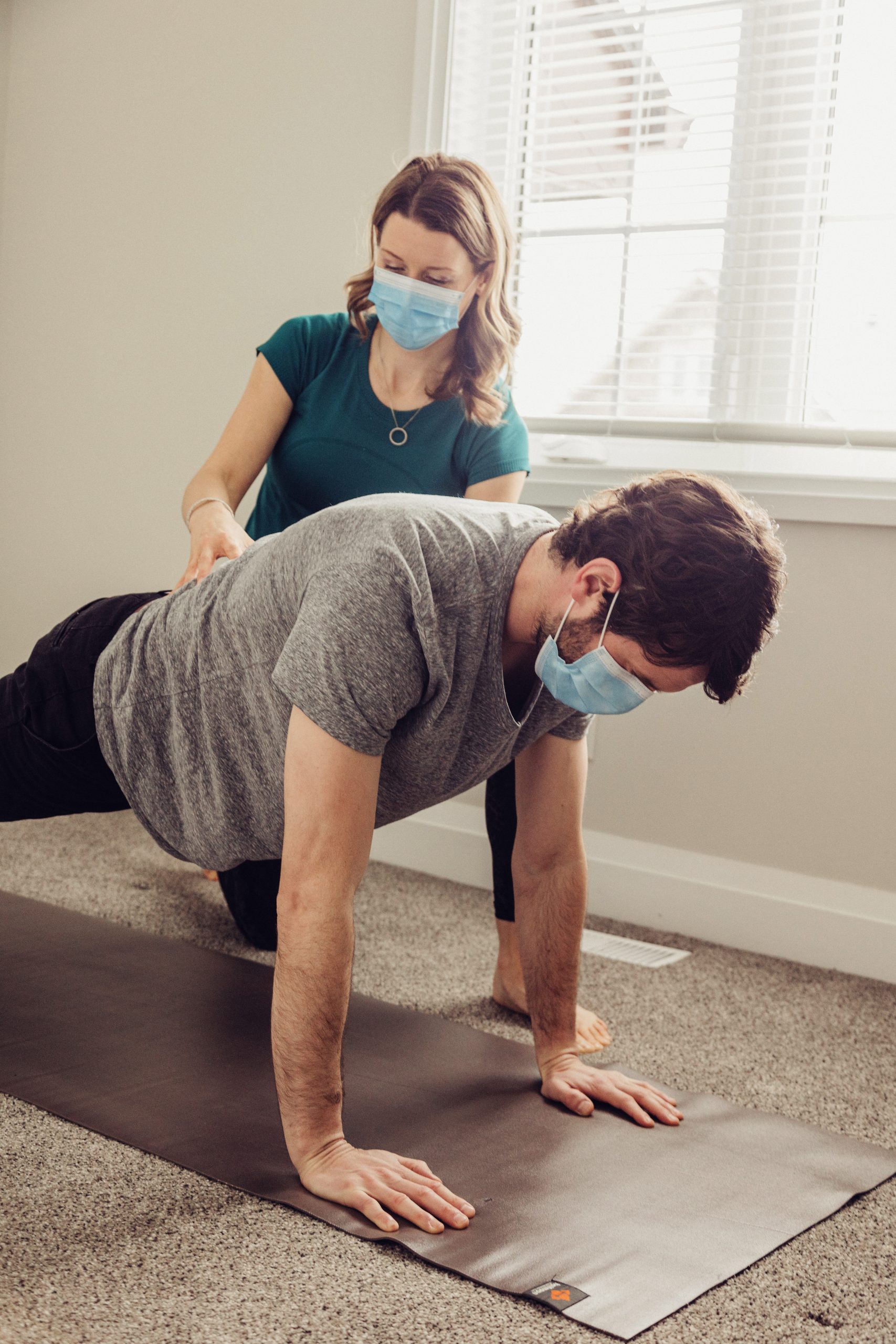
Does This Sound Familiar?
- Low back pain that is worse when you sit, bend, or lift
- Pain when you cough or sneeze
- Pain, tingling, or numbness running down your leg (sciatica)
- Stiffness first thing in the morning
- Difficulty standing up straight after sitting
- Leaning or shifting to one side to ease the pain
Common Causes We Assess
- Age-related changes in the discs
- Repeated bending and lifting, especially with twisting
- Long periods of sitting
- A sudden heavy lift or awkward movement
- Family history
- Smoking and lower fitness levels
A disc herniation can cause very different symptoms from person to person, and the right plan depends on yours. That is why every visit starts with a thorough assessment.
What Is a Disc Herniation?
Between each bone in your spine sits a disc: a tough outer ring with a softer, gel-like centre. Discs act as shock absorbers and let your spine bend and twist. A disc herniation happens when part of that softer centre pushes out through the outer ring. It is most common in the lower two levels of the low back.
You may hear different terms for this, including bulging, slipped, or ruptured disc. They describe how far the disc material has moved, but none of them means the disc has actually slipped out of place.
What Your MRI Report Means
Disc bulges and herniations are very common on scans of people who have no back pain at all, and they become more common with age, a bit like grey hair. That means a finding on your MRI may not be the cause of your pain.
When a herniated disc does cause symptoms, it is usually because it irritates a nearby nerve. The encouraging news is that research shows many disc herniations shrink and settle over time, and most people do not need surgery. Your Physiotherapist can walk you through your report and explain what it means for you.
How We Assess a Disc Herniation
Your Physiotherapist will ask about your symptoms and what makes them better or worse, check how your back and hips move, and test your reflexes, strength, and sensation to see whether a nerve is involved. We will look for movements and positions that ease your pain, which often guide the first steps of treatment, and screen for anything that needs a doctor’s attention.
Disc Herniation Treatment at Excite Physiotherapy
Your Physiotherapist will build a plan around your goals, whether that is getting through a work day, lifting your kids, or getting back to the gym. Depending on your assessment, treatment may include:
- Understanding your diagnosis so you can move with confidence rather than fear
- Specific repeated movements when they ease your symptoms
- Advanced Manual Therapy for the spine, pelvis, and hips
- IMS / dry needling for tight, protective muscles
- Progressive strengthening, including core strengthening, to build back up to lifting and sport
- Sitting and workstation advice to make long days easier on your back
Do I Need Surgery for a Herniated Disc?
Most people with a disc herniation improve without surgery. Surgery may be considered when leg pain stays severe for many weeks despite good care, or when there is significant or worsening weakness. Changes in bladder or bowel control, or numbness in the groin, are a medical emergency.
What Recovery Usually Looks Like
Many people with a disc herniation improve over several weeks to a few months. Staying active, within comfortable limits, is an important part of recovery. Your Physiotherapist will help you gradually build back up to the activities that matter to you.
Not Sure Whether Physiotherapy Is Right for You?
Book a complimentary 15-minute discovery call with one of our Physiotherapists. It is a short online chat where you can ask questions before you book an assessment.
What to Expect at Your First Visit
- We listen. Your Physiotherapist will ask about your symptoms, your work, your activity, and what you want to get back to.
- We assess. A hands-on assessment of your back, hips, and nerves helps identify what is contributing to your pain, and screens for anything that needs a doctor’s attention.
- We make a plan together. You will leave with a clear explanation of what is going on, a treatment plan, and exercises you can start at home.
Please wear comfortable clothing that lets you move freely, such as shorts or loose pants. Read more about your first Physiotherapy appointment.
When to Get Urgent Medical Care
Go to the emergency department or call 911 if your back pain comes with any of these:
- New trouble controlling your bladder or bowels
- Numbness in your groin, inner thighs, or around your bottom
- Weakness in your legs that is getting worse
- Back pain after a major fall or accident
- Back pain with a fever or unexplained weight loss
What Our Patients Say
From our Google reviews
★★★★★
“I went to Christine for a lower back issue and a shoulder issue. She diagnosed both right away…”
S.E. · treated by Christine
★★★★★
“Thanks so much for helping me with my back pain.”
L.B. · treated by Anthony
Frequently Asked Questions
Do I need a doctor’s referral?
No referral is needed to see a Physiotherapist in Ontario. Some insurance plans require one for reimbursement, so check your plan if you are unsure.
Can a herniated disc heal on its own?
Many disc herniations shrink and settle over time, and symptoms often improve with the right care and gradual return to activity.
Is a bulging disc the same as a herniated disc?
They are related. A bulging disc spreads out more evenly around its edge, while a herniation usually means the softer centre has pushed out in one spot. Both are common on scans, including in people without pain.
Will I have to avoid bending and lifting forever?
No. Your spine is strong and adaptable. With a gradual plan, most people return to bending, lifting, and their usual activities.
Is it safe to exercise with a disc herniation?
Yes, with the right guidance. The right exercises are an important part of recovery, and your Physiotherapist will help you choose and progress them safely.
Is Physiotherapy covered by insurance?
Physiotherapy is covered by most extended health plans, and we direct bill to many insurers. See our FAQ page for the full list.
Where are you located?
Excite Physiotherapy is at 105 Collier Street in downtown Barrie, Ontario.
Related Conditions
Ready to Take the Next Step?
Book online in a few minutes and choose a time that works for you.
Or call or text (705) 279-2759
© 2026 Excite Physiotherapy, All Rights Reserved

Visit Us:
info@excitephysio.com
Hours:
Mon: 8:30 am to 7 pm
Tue and Wed: 7:30 am to 7 pm
Thu: 8:30 am to 7 pm
Fri: 7:30 am to 3:30 pm
Sat and Sun: Closed
Experience. Exceptional Skills. Results.
Whether you are experiencing back pain for the first or have been suffering with pain for years, we have the experience and the skills necessary to help you get relief quickly. Located downtown Barrie, Ontario.
Land Acknowledgement
We acknowledge that we are on the traditional territory of Anishinaabeg people, which include the Odawa, Ojibwe, and Pottawatomi Nations collectively known as the Three Fires Confederacy. We are dedicated to moving forward in the spirit of respect and reconciliation by honoring the history and culture of Indigenous people.
Safe Space
 At Excite physiotherapy we are committed to creating a safe space that serves a diverse community. In a culture of connectedness, we can empower each other to thrive and grow.