What is TMJ Dysfunction or Jaw Pain?
TMJ Dysfunction (jaw pain) is a common condition affecting the jaw. It can make things like eating and chewing difficult. Patients with this condition may clench their jaw or grind their teeth at night. Maybe you have been prescribed a night guard for your jaw pain. This only helps to save your teeth, and may not address the underlying TMJ dysfunction. As highly trained Physiotherapists we look at the root cause of the issue, and use our expert TMJ treatment to fix the problem for good.
What Causes Jaw Pain?
There are several muscles involved in chewing that might be the culprit. Masseter, temporalis and lateral pterygoid. There is also a disc in there that may get stuck, making it difficult to open your mouth. The condition is called anterior disc displacement. Interestingly, the lateral pterygoid is attached to this disc and can cause it to get stuck or not move like it should.
What Types of TMJ Treatment are Available?
As your go to Physiotherapy Clinic in Barrie for TMJ treatment, we utilize techniques such as manual joint glides, dry needling, muscle release techniques, as well as exercises. We empower our patients to take rehabilitation into their own hands. We find this yields better results than months of passive treatments. At Excite Physiotherapy you won’t get hooked up to any machines, or sit with a heating pad. You’ll be learning about the root causes of your TMJ related jaw pain & headaches and how you can accelerate the healing process.

What Else May Be Causing TMJ Pain?
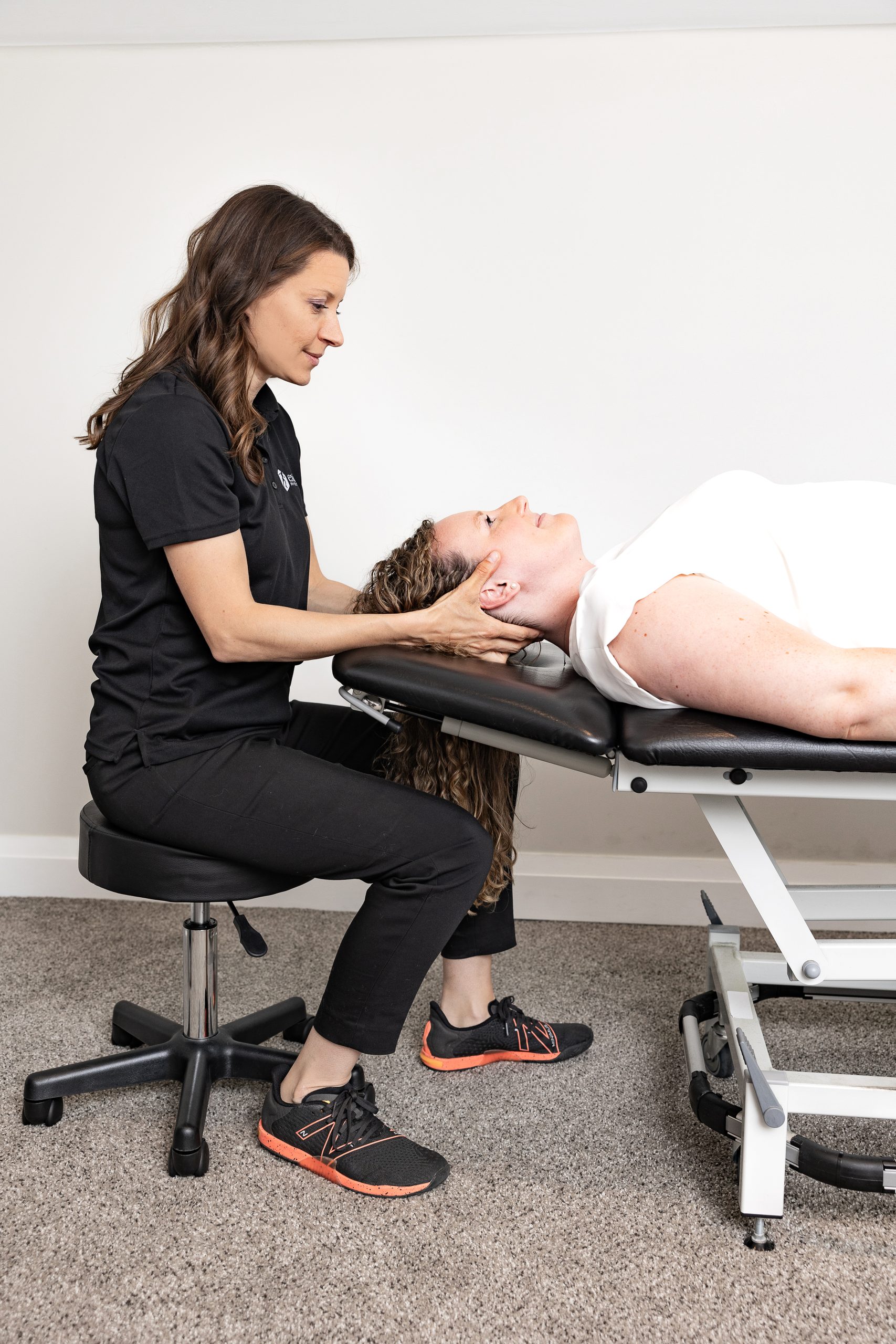
The upper neck is intimately related to the TMJ, with direct nerve connections in close proximity to each other. In some cases the C1 is so rotated that it is almost touching the mandible. We believe that having your neck assessed and treated in conjunction with your jaw is imperative to full symptom resolution.
This Rocabado 6×6 exercise guide (PDF) was created by expert Mariano Rocabado and offers a series of exercises to help with TMJ pain.
Click the button below to open a printable flyer for easy referral

About Us:
Barrie’s Best TMJ Treatment
If you are in Barrie, or the surrounding area, and are currently suffering from jaw, neck or head pain, then you may be suffering from Temporomandibular Joint Disorder (TMD) and should take action right away.
Click the PDF Referral Form button to get a referral form
Contact Excite Physio
If you have more questions, or need assistance with setting up a consultation, then please click the button to contact us directly!

Frequently Asked Questions About TMD and TMJ Pain
What is the difference between TMJ and TMD?
TMJ stands for temporomandibular joint — the hinge joint connecting your jaw to your skull, located just in front of each ear. TMD (temporomandibular disorder) refers to the group of conditions that cause pain and dysfunction in that joint and the surrounding muscles. In everyday conversation, people often use “TMJ” to mean the condition itself, but the correct clinical term is TMD.
What are common symptoms of TMD?
TMD symptoms vary but commonly include:
- Jaw pain or soreness, especially in the morning or after eating
- Clicking, popping, or grinding sounds when opening or closing the mouth
- Limited jaw opening or the jaw locking open or closed
- Headaches and migraines, particularly at the temples
- Ear pain, fullness, or ringing (tinnitus) without an ear infection
- Neck pain and upper shoulder tension
- Pain or difficulty chewing tough foods
- Tooth sensitivity or grinding (bruxism)
Can physiotherapy help with TMJ pain?
Physiotherapy is a common conservative option for managing TMD. At Excite Physiotherapy, treatment may include manual therapy, dry needling (IMS), exercise prescription, and postural retraining. These approaches aim to reduce jaw pain, support normal joint mechanics, and address contributing factors such as neck dysfunction and muscle tension. Response to treatment varies by person, and your physiotherapist will work with you to build a plan suited to your specific situation.
What does a TMD physiotherapy appointment look like?
Your first appointment includes a thorough assessment of your jaw, neck, and posture. We assess jaw range of motion, muscle tenderness, joint sounds, and the relationship between your jaw and cervical spine. Treatment in the same visit may include joint mobilization, soft tissue release, dry needling of jaw and neck muscles, and a home exercise program. Appointments typically run 45–60 minutes.
How many sessions will I need?
Most patients with TMD see meaningful improvement within 4–8 sessions, though this depends on the duration and severity of your symptoms, the underlying cause, and how consistently you do your home exercises. Chronic or complex cases may require a longer course of treatment. Your physiotherapist will give you a realistic estimate at your initial assessment.
Is TMD connected to neck pain and headaches?
Very often, yes. The jaw, neck, and upper back share nerve pathways and muscle groups, so dysfunction in one area frequently affects the others. Many people with TMD also have cervical spine stiffness, poor posture, or upper trapezius tension that contributes to their jaw symptoms. Treating the full picture — not just the jaw in isolation — is central to our approach at Excite Physiotherapy.
Can I book a physiotherapy appointment for TMD in Barrie?
Yes. Excite Physiotherapy at 105 Collier Street in downtown Barrie offers TMD assessment and treatment. You can book directly online through Jane App, and no physician referral is required. We also offer virtual physiotherapy consultations for patients outside the Barrie area.
Does TMD treatment hurt?
Some aspects of treatment, such as dry needling or joint mobilization, may cause brief discomfort, but treatment should never be excessively painful. Your physiotherapist will always explain techniques in advance, work within your comfort level, and adjust the approach based on your feedback. Most patients feel significant relief and improved jaw movement immediately after their first treatment.

© 2026 Excite Physiotherapy, All Rights Reserved

Experience. Exceptional Skills. Results.
Whether you are experiencing back pain for the first or have been suffering with pain for years, we have the experience and the skills necessary to help you get relief quickly. Located downtown Barrie, Ontario.
Land Acknowledgement
We acknowledge that we are on the traditional territory of Anishinaabeg people, which include the Odawa, Ojibwe, and Pottawatomi Nations collectively known as the Three Fires Confederacy. We are dedicated to moving forward in the spirit of respect and reconciliation by honoring the history and culture of Indigenous people.
Safe Space