Calcific Tendinitis Treatment in Barrie
Sudden, intense shoulder pain that makes it hard to lift your arm or sleep? Calcium deposits in a rotator cuff tendon, called calcific tendinitis, can be one of the most painful shoulder problems. Our Physiotherapists can assess your shoulder and build a plan to help.
- One-on-one assessment with a Registered Physiotherapist
- Exercise-based rehab, manual therapy, IMS / dry needling, and Shockwave Therapy
- Direct billing to most insurance providers
- Downtown Barrie at 105 Collier Street
Prefer to talk first? Call or text (705) 279-2759

Does This Sound Familiar?
- Intense shoulder pain that can come on suddenly, sometimes with no clear injury
- Pain on the outside of the upper arm when you lift your arm
- Pain at night that makes it hard to sleep
- Trouble lifting your arm because of pain
- A shoulder that has been sore on and off for months
Common Causes We Assess
- Calcium deposits forming in a rotator cuff tendon, most often the supraspinatus
- Being between 30 and 60 years old, and more often in women
- Diabetes and some metabolic conditions
- Often no clear cause
Calcific tendinitis can look like other shoulder problems, so an accurate assessment matters. An X-ray or ultrasound is usually used to confirm the calcium deposit.
What Is Calcific Tendinitis?
Calcific tendinitis happens when calcium deposits build up inside a tendon of the rotator cuff. It often moves through phases: the deposit forms, may sit quietly for a while, and then the body starts to break it down and reabsorb it. The reabsorbing phase is often the most painful, which is why symptoms can flare suddenly.
Many people have calcium deposits that cause no pain at all. When they do cause pain, the right treatment can help settle symptoms and restore movement.
How We Assess Calcific Tendinitis
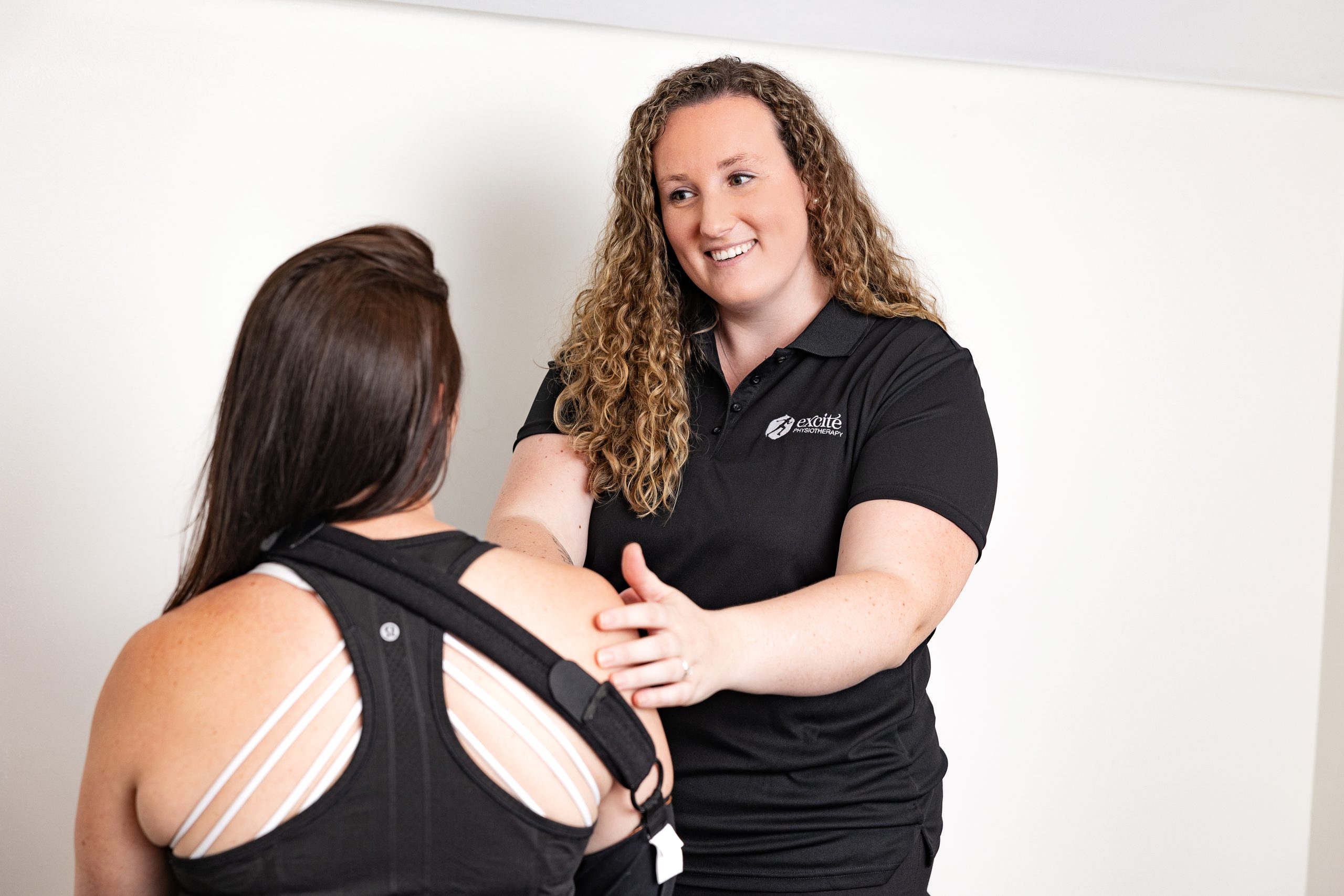
Your Physiotherapist will ask about your symptoms, check how your shoulder moves, test your rotator cuff strength, and check your neck. If calcific tendinitis is suspected and you have not had imaging, we may suggest you see your doctor for an X-ray or ultrasound to confirm the size and location of the deposit.
Calcific Tendinitis Treatment at Excite Physiotherapy
Treatment depends on how irritable your shoulder is. Depending on your assessment, it may include:
- Shockwave Therapy, which research supports for calcific tendinitis of the shoulder
- Pain relief and activity advice during painful flares
- A progressive strengthening program for the rotator cuff and shoulder blade muscles as pain settles
- Advanced Manual Therapy for the shoulder, neck, and upper back
- Working with your doctor if other options, such as an injection or a procedure to break up the deposit, are worth considering
What Recovery Usually Looks Like
Many people notice their pain settle over several weeks of treatment, while strength and full movement can take longer to return. Your Physiotherapist will adjust your plan as your shoulder improves.
Not Sure Whether Physiotherapy Is Right for You?
Book a complimentary 15-minute discovery call with one of our Physiotherapists. It is a short online chat where you can ask questions before you book an assessment.
What to Expect at Your First Visit
- We listen. Your Physiotherapist will ask about your symptoms, your work, your activity, and what you want to get back to.
- We assess. A hands-on assessment of your shoulder and neck helps identify what is contributing to your pain, and screens for anything that needs a doctor’s attention.
- We make a plan together. You will leave with a clear explanation of what is going on, a treatment plan, and exercises you can start at home.
Please wear a tank top or loose t-shirt so we can see and move your shoulder. Read more about your first Physiotherapy appointment.
When to Get Urgent Medical Care
Go to the emergency department or call 911 if your shoulder pain comes with any of these:
- Chest pain, shortness of breath, sweating, or nausea, especially with left shoulder or arm pain
- A shoulder that looks deformed or that you cannot move after a fall or injury
- A red, hot, swollen shoulder with a fever
- Sudden weakness or numbness in your arm along with face drooping or trouble speaking
Frequently Asked Questions
Do I need a doctor’s referral?
No referral is needed to see a Physiotherapist in Ontario. Some insurance plans require one for reimbursement, so check your plan if you are unsure.
Does Shockwave Therapy help calcific tendinitis?
Research supports Shockwave Therapy for calcific tendinitis of the shoulder. Your Physiotherapist will check that it is suitable for you first.
Will the calcium deposit go away?
Calcium deposits often break down and reabsorb over time. Treatment focuses on easing your pain and restoring movement and strength, whether or not the deposit is still visible on imaging.
Do I need an X-ray?
Calcific tendinitis is usually confirmed with an X-ray or ultrasound. If you have not had one, your Physiotherapist may suggest seeing your doctor.
Is Physiotherapy covered by insurance?
Physiotherapy is covered by most extended health plans, and we direct bill to many insurers. See our FAQ page for the full list.
Where are you located?
Excite Physiotherapy is at 105 Collier Street in downtown Barrie, Ontario.
Related Conditions
Ready to Take the Next Step?
Book online in a few minutes and choose a time that works for you.
Or call or text (705) 279-2759


© 2026 Excite Physiotherapy, All Rights Reserved

Visit Us:
info@excitephysio.com
Hours:
Mon: 8:30 am to 7 pm
Tue and Wed: 7:30 am to 7 pm
Thu: 8:30 am to 7 pm
Fri: 7:30 am to 3:30 pm
Sat and Sun: Closed
Experience. Exceptional Skills. Results.
Whether you are experiencing back pain for the first or have been suffering with pain for years, we have the experience and the skills necessary to help you get relief quickly. Located downtown Barrie, Ontario.
Land Acknowledgement
We acknowledge that we are on the traditional territory of Anishinaabeg people, which include the Odawa, Ojibwe, and Pottawatomi Nations collectively known as the Three Fires Confederacy. We are dedicated to moving forward in the spirit of respect and reconciliation by honoring the history and culture of Indigenous people.
Safe Space